
Picture yourself with a shiny new car that drives itself. It’s fast, it’s shiny, and it’s promised to get you to your goal while you sit back and rest. But there’s a catch: the car has no brakes, and the steering wheel doesn’t always listen.
Would you get in? Of course not.
Trading with Artificial Intelligence (AI) is exactly like that car. AI can be an incredibly powerful “engine” for your money. It can scan the Toronto Stock Exchange (TSX) in milliseconds, find patterns that humans would miss, and execute trades faster than you can blink. But without “brakes”—which we call risk management in AI trading—that fast car will eventually crash.
The notion of a robot taking care of Canadians’ hard-earned loonies is both intriguing and frightening. We’ve all heard of ‘black box’ algorithms that went wild and wiped out accounts in minutes.
In this guide, we are going to strip away the complex jargon. I’m going to show you exactly how to build a digital safety net around your investments. Whether you are using a simple robo-advisor or a complex trading bot, you will learn how to stay in control, follow Canadian regulations, and ensure that your AI works for you—not against you.
Table of Contents
1. What Exactly is Risk Management in AI Trading?
At its simplest level, risk management is the art of “not losing everything.” In the world of AI, it means putting rules in place so the computer knows exactly when to stop.
Think of AI as a very smart, very fast student. If you give that student a math test but don’t tell them the rules, they might come up with wild answers. In trading, “rules” are things like:
- How much money am I allowed to lose on one trade?
- When should the computer give up and sell?
- How many different things should I buy at once?
The biggest mistake people make is thinking the AI is “smarter” than the market. It isn’t. The market is like the weather in the Rockies—it can change in a heartbeat. Risk management is your warm coat and your emergency kit. It doesn’t stop the storm from happening, but it keeps you safe until the sun comes back out.

Also Read: what is ai arbitrage
2. The 1% Rule: Don’t Put All Your Loonies in One Basket
One of the most important parts of risk management in AI trading is something called Position Sizing. This is a fancy way of saying “how much of your total pile of money you put into a single trade.”
In Canada, many successful traders follow the 1% Rule. Here is how it works: If you have $10,000 in your trading account, you should never risk losing more than $100 (which is 1%) on a single trade.
How the AI Helps
A human trader might get excited about a “hot tip” on a new tech stock in Vancouver and put $5,000 into it. If that stock drops by half, they’ve lost a huge chunk of their savings.
An AI, however, can be programmed to do the math for you:
- It looks at your total balance ($10,000).
- It looks at the 1% limit ($100).
- It calculates exactly how many shares to buy so that if the stock hits your “safety net” price, you only lose that $100.
By keeping every loss tiny, you ensure that even if the AI gets ten trades wrong in a row, you still have plenty of money left to keep going.

3. Digital Safety Nets: Smart Stop-Losses
In the previous section, I mentioned a “safety net.” In the trading world, this is called a Stop-Loss. It is a preset instruction that tells the computer: “If this stock drops to this specific price, sell it immediately. Do not wait. Do not hope it goes back up. Just get out.”
Why AI Does This Better Than Humans
Humans are hopeful. If we buy a stock at $50 and it drops to $45, we think, “Oh, it’ll bounce back tomorrow.” Then it drops to $40, then $30.
AI doesn’t have “hope.” It only has instructions.
Trailing Stop-Losses. This is a more advanced version that AI handles perfectly. Imagine you buy a stock at $10, and it goes up to $15. A “Trailing Stop” follows the price up. If you set it 10% below the peak, your safety net moves from $9 up to $13.50. If the stock suddenly crashes, the AI sells at $13.50. You didn’t just avoid a loss—the AI helped you lock in a profit.
Featured Snippet Opportunity: How does AI reduce trading risk? AI reduces trading risk by removing human emotions like fear and greed. It executes pre-set “Stop-Loss” orders instantly when a price is hit, calculates safe “Position Sizes” to ensure no single loss is too large, and uses historical data to test if a strategy is safe before any real money is spent.

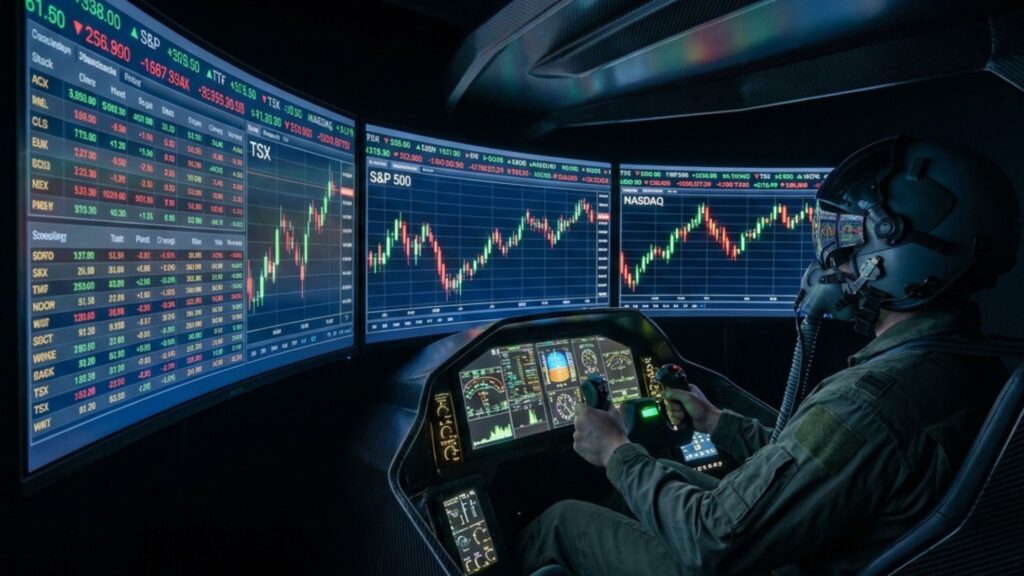
4. Backtesting: Using a Flight Simulator Before You Fly
Before a pilot flies a 747 from Toronto to London, they spend hundreds of hours in a flight simulator. They practice what to do if an engine fails or if there is a massive storm.
In AI trading, we call our simulator Backtesting.
Backtesting is the process of taking your AI’s trading strategy and running it against ten or twenty years of old stock market data. You are essentially asking the computer: “If I had used this exact AI bot in 2008 during the financial crisis, or in 2020 during the pandemic, would I have gone broke?”
The Danger of “Overfitting”
There is a catch here. Sometimes, people tweak their AI so much that it perfectly “predicts” what happened in the past. This is like memorizing the answers to last year’s math test. It doesn’t mean you’ll pass this year’s test!
Professional risk management in AI trading uses something called Walk-Forward Optimization. This means we test the AI on data it has never seen before. If the AI still performs well on “new” old data, it’s a much safer bet for your real money.
5. Model Drift: Why Your AI Needs a Human Boss
Markets change. What worked in 2025 might not work in 2026. For example, if the Bank of Canada suddenly raises interest rates, the way people spend money on houses and cars changes.
If your AI was trained during a time of low interest rates, its “brain” might not understand this new reality. This is called Model Drift.
The “Human-in-the-Loop” Strategy
The safest way to manage an AI is to be its boss, not its passenger. You should check in on your AI regularly to make sure its logic still makes sense for today’s world. If the AI starts making weird trades that don’t match the current economy, it’s time to turn it off and retrain it.
Even in 2026, the best “risk management tool” is still a well-informed human brain overseeing the machine.

6. Staying Legal: The “Canadian Shield” of Regulations
In Canada, we are very lucky to have some of the strictest financial rules in the world. These rules are there to protect you from losing money to bad actors or poorly built systems.
CIRO and the CSA
If you are using a trading platform or a bot provided by a company, they must be registered with the Canadian Investment Regulatory Organization (CIRO).
Why does this matter for risk management?
- Segregated Funds: It means your money isn’t just sitting in the company’s pocket; it’s held safely in a separate account.
- CIPF Protection: If a regulated Canadian broker goes bankrupt, the Canadian Investor Protection Fund (CIPF) can protect your account up to $1 million.
- Algorithmic Rules (NI 23-103): There is a specific Canadian law that says any company using automated trading must have “kill switches” to stop the AI if it starts acting crazy.
If you use an unregulated platform from a random website, you have zero protection. Real risk management starts with using a legal, Canadian-regulated broker.

7. The “Kill Switch”: Preparing for Technical Glitches
Sometimes the risk isn’t the stock market; the risk is the technology itself. What happens if your internet goes down during a trade? What if your neighbourhood is without power?
Professional AI traders manage this risk in two ways:
- The VPS (Virtual Private Server): Instead of running the AI on their home laptop, they run it on a powerful computer in a professional data center (usually in Toronto). These centers have backup batteries and multiple internet connections, so the AI never goes offline.
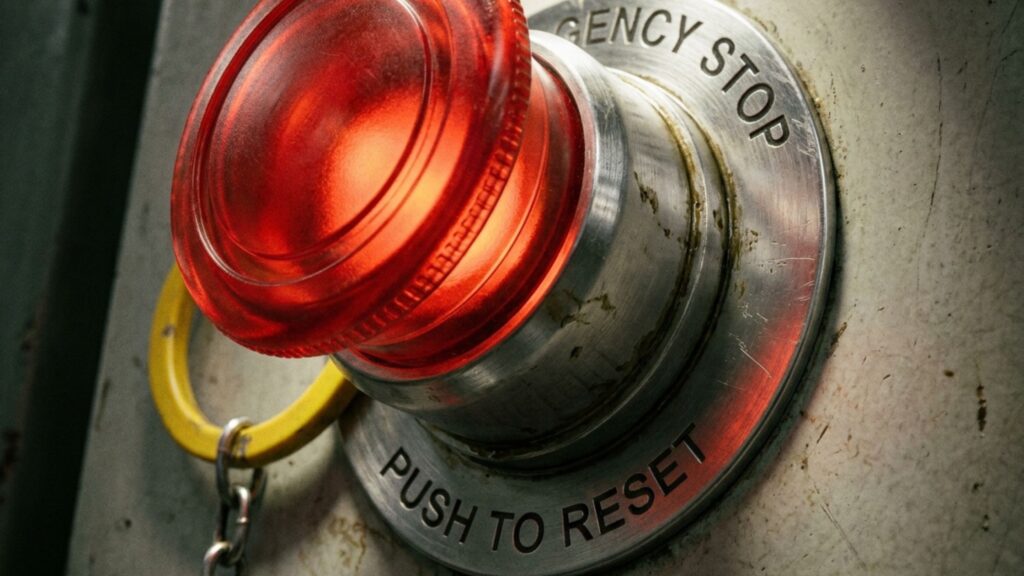
- The Manual Kill Switch: Every good AI system should have one big “Stop” button. If you see the AI doing something it shouldn’t—like buying the same stock over and over again by mistake—you need to be able to shut it down instantly.
Also Read: Best Trading Platform Canada: The Ultimate Guide for Beginners and Pros
8. Frequently Asked Questions (FAQs)
Is AI trading risky for beginners?
Yes, it may be highly risky if you don’t put in place risk management systems. However, for most beginners, it’s really better to utilize a regulated “Robo-Advisor” than to pick stocks yourself because the robo-advisor employs AI to automatically manage risk for you.
What is the “Black Box” in AI trading?
A “Black Box” refers to an AI system where the user can’t see how the computer is making decisions. Good risk management avoids these. You should always use an AI where you understand the basic rules it is following.
How much money do I need to start AI trading in Canada?
You may get started with a little $50 or $100 with Canadian applications such as Wealthsimple or Questrade that employ algorithms to assist in managing your portfolio risk.
Does the Bank of Canada affect my AI trading bot?
Yes. The Bank of Canada increases interest rates, which affects the value of the Canadian Dollar and the TSX. A solid AI strategy needs to be updated to address these developments.
Conclusion: Safety First, Profits Second
In the end, risk management in AI trading comes down to one thing: playing the game.
The stock market is a marathon, not a sprint. A pair of high-tech running shoes that can help you run faster and more effectively. But if those shoes ain’t laced the right way, you’re going to fall.
By using the 1% Rule, setting Stop-Losses, Backtesting your ideas, and sticking to regulated Canadian brokers, you are tying your laces. You are making sure that even if you trip, you won’t get hurt so badly that you have to stop running.
Your Next Step: Don’t rush out and buy a complex trading bot today. Instead, start by looking at your current investments. Do you have a “safety net” (stop-loss) for your biggest stocks? If not, log in to your brokerage account and set one up. Taking control of your risk is the first step toward becoming a truly successful, tech-savvy investor.